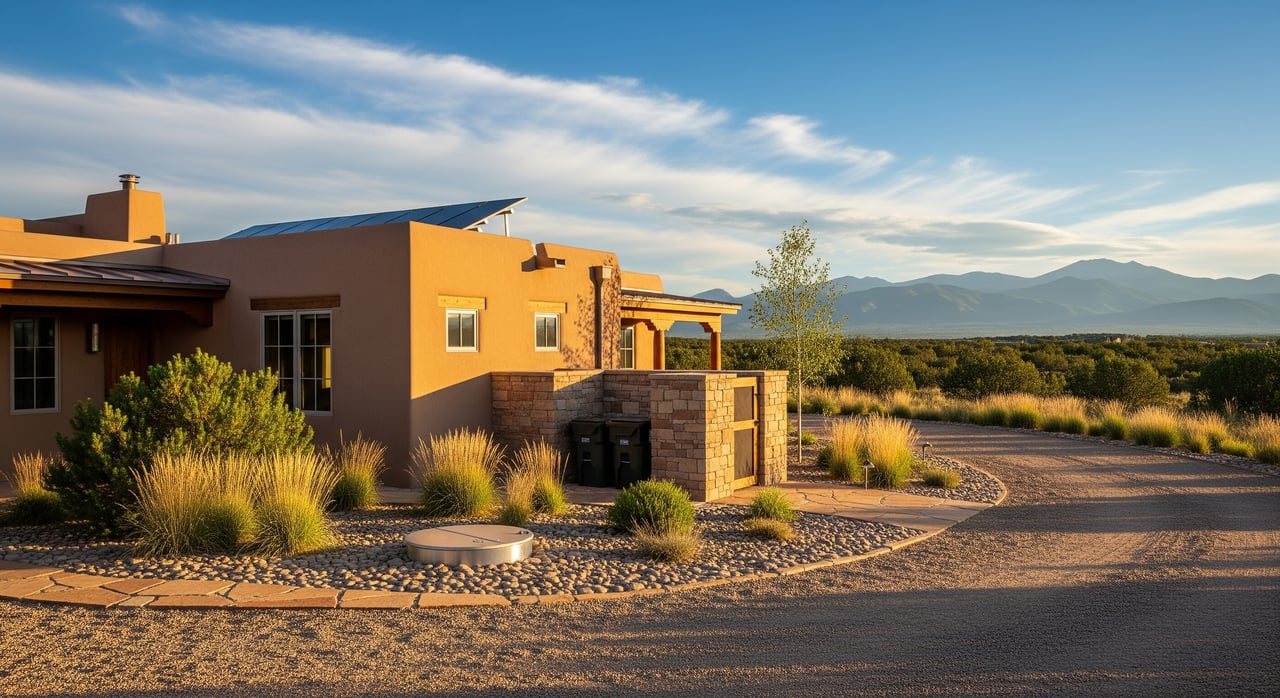
Thinking about moving to Nambe and wondering how everyday essentials work outside city limits? Rural living comes with fresh air, starry skies, and a few systems you may not have used before. From private wells and septic systems to propane deliveries, trash options, and wildfire readiness, a little planning goes a long way. This guide gives you the essentials so you can settle in with confidence and keep your home safe and well maintained. Let’s dive in.
Water: Private Wells in Nambe
Private wells are common in Nambe. Unlike public water systems, you are responsible for water quality, testing, and upkeep. Understanding permits, records, testing schedules, and basic maintenance helps you protect your water supply and your investment.
Permits and records
- Confirm the well is permitted and registered with the New Mexico Office of the State Engineer. If it is not registered, it can complicate title and future resale.
- Request recent well records, including the driller’s log, total depth, pump depth, static water level, and casing details.
- If you plan to drill a new well, use a licensed driller familiar with Santa Fe County conditions and follow state permitting and registration procedures.
Testing schedule
- At move-in and annually, test for total coliform and E. coli, nitrate, and basic chemistry such as pH, total dissolved solids, and conductivity.
- Every 2 to 5 years, or if local geology suggests, test for arsenic, uranium, fluoride, sulfate, and lead if your plumbing is older.
- Retest for bacteria after any well repairs, pump replacement, or nearby construction.
Maintenance basics
- Inspect the wellhead and cap to make sure it is intact and sealed against insects and animals.
- Track service history for pumps and pressure tanks. These components have finite lifespans and need periodic attention.
- Protect your well from surface contamination. Maintain appropriate setbacks from septic systems, livestock areas, and fuel storage. Confirm current setback requirements with Santa Fe County Environmental Health and the state.
- If you have water treatment equipment, maintain it according to manufacturer guidance and verify performance with follow-up testing.
Who to contact for wells
- New Mexico Office of the State Engineer for well permits and records.
- New Mexico Environment Department or Department of Health for testing guidance and lab options.
- Santa Fe County Environmental Health or Building Department for local siting or related permits.
- Licensed local well drillers and certified laboratories for drilling, servicing, and testing.
Wastewater: Septic Systems
Most rural properties rely on on-site wastewater systems. Good records and regular maintenance help you avoid costly repairs and protect your well and groundwater.
Permits and inspections
- Septic systems in Santa Fe County require permits and inspections through Santa Fe County Environmental Health.
- New Mexico has state technical standards. Alternative systems, such as aerobic units or mounds, need approved designs and maintenance agreements.
Buying or building checklist
- For existing systems, request permit and as-built records showing tank size, tank location, drainfield layout, and installation date.
- During a purchase, include a septic inspection as a contract contingency. Functional tests and tank inspection are common.
- For new systems or major repairs, complete a site evaluation and soil testing or percolation assessment and obtain permits before construction.
Maintenance and warning signs
- Pump the tank every 3 to 5 years on average. Household size, tank size, and water use can change the frequency.
- Do not flush grease, wipes, sanitary products, or harsh chemicals. These can lead to failures and shorten system life.
- Protect the drainfield by avoiding vehicle traffic and deep-rooted trees. Maintain proper grading to keep surface water away.
- Watch for signs of trouble such as sewage odors, slow drains, soggy areas over the drainfield, or backups. Call a licensed septic professional right away if you notice these.
Who to contact for septic
- Santa Fe County Environmental Health or On-Site Wastewater program for permits and inspections.
- Licensed septic designers, installers, and pumpers for inspections, routine service, and repairs.
Propane for Heat and Cooking
Many Nambe homes use propane for heating, hot water, and appliances where natural gas service is not available. Plan for safe installation, reliable deliveries, and regular checks.
Installation and permits
- Use a licensed propane company or certified technician to install tanks and equipment.
- Above-ground and underground tanks must meet code requirements. Larger tanks or certain placements often require county building permits and Fire Marshal review. Confirm details with Santa Fe County before you install.
- Ask for documentation on tank location, setbacks, anchoring, and regulator and shutoff placement.
Delivery planning
- Choose automatic delivery or track your tank gauge and call for refills before levels get too low.
- Make sure delivery trucks can access your driveway in all seasons. Steep grades, tight turns, and snow can affect deliveries.
Safety checks
- Schedule regular leak checks and valve inspections with your supplier.
- If you smell propane, evacuate the area and contact your supplier and emergency services immediately.
Who to contact for propane
- Licensed propane suppliers for installation, delivery, and safety inspections.
- Santa Fe County Building Department and Fire Marshal for permits and fire code questions.
Trash, Recycling, and Burning
In unincorporated Nambe, you may not have municipal curbside service. You will likely use a private hauler or take trash to county transfer stations. Know your options and follow local rules for burning.
Collection options
- Private haulers serve many rural addresses. Ask neighbors for recommendations and compare contract terms.
- You can also haul trash yourself. Contact Santa Fe County Solid Waste Division for transfer station locations, hours, and fees.
Transfer stations and bulky items
- For appliances, construction debris, and large items, call your local transfer station or private hauler to confirm disposal rules and costs.
- Keep a list of what each facility accepts so you can plan ahead for remodels or cleanouts.
Hazardous and green waste
- Items like paint, pesticides, solvents, automotive fluids, and batteries are usually banned from regular trash. Look for county or regional household hazardous waste events.
- Many communities offer seasonal green waste options. In WUI areas, chipping or designated drop-off helps manage defensible-space thinning material.
Open burning rules
- Burning household trash is generally prohibited and unsafe.
- Open burning of yard waste is regulated at the state and county levels. Burn permits and seasonal restrictions are common, and burning is often prohibited during high fire danger.
- Always check current restrictions with Santa Fe County Fire and the New Mexico State Forestry Division before you burn. Consider chipping or hauling as alternatives.
Who to contact for trash and burning
- Santa Fe County Solid Waste Division for transfer stations, fees, and hazardous waste events.
- Santa Fe County Fire Department and New Mexico State Forestry Division for burn permits and restrictions.
- Private haulers for regular service and bulky-item pickup.
Wildfire Readiness in the WUI
Nambe sits within a Wildland-Urban Interface where forests, brush, and grasslands meet homes. Drought and wind can elevate fire risk. A few focused steps can reduce exposure and improve safety for you and your neighbors.
Risk assessments
- Request a home wildfire risk assessment from Santa Fe County Fire, the New Mexico State Forestry Division, or your local volunteer fire department.
- Use their recommendations to prioritize projects that will have the biggest impact.
Defensible space
- Keep the area closest to your home lean, clean, and green. Remove flammable debris and prune lower tree limbs to reduce ladder fuels.
- Maintain spacing between trees and shrubs based on slope and vegetation. Ask local fire officials for property-specific guidance.
Home hardening
- Improve ember resistance where practical. Consider noncombustible roofing, enclosed eaves and soffits, ember-resistant vents, fire-resistant siding, and tempered or double-pane windows.
- Repair or replace compromised materials that can collect embers, such as loose decking boards or damaged screens.
Water and access
- Ensure there is an accessible water source for firefighting, such as a pressurized cistern or dedicated tank with a pump hookup.
- Keep driveways and gates clear for emergency vehicles. Provide visible address signage that can be read from the road.
Alerts and evacuation
- Sign up for Santa Fe County emergency notifications and monitor local updates during fire season.
- Prepare a go-bag with medications, documents, and essentials. Include a plan for pets and livestock.
Insurance and records
- Wildfire risk can affect insurance availability and pricing. Keep records of mitigation work, such as photos and receipts, to document risk reduction and support underwriting or claims.
Programs and cost sharing
- Ask about community programs, including Firewise USA participation or hazardous-fuels reduction projects. These can offer technical help and sometimes grant opportunities.
Who to contact for wildfire readiness
Santa Fe County Fire Department and local volunteer fire districts for assessments, burn permits, and evacuation guidance.
New Mexico State Forestry Division for mitigation programs and seasonal restrictions.
Quick Start Checklist
Use this checklist to get up to speed in your first month and beyond.
At contract and close
- Request well and septic permits and records from the seller.
- Order a septic inspection and a comprehensive well water test.
Within your first week
- Sign up for Santa Fe County emergency alerts.
- Locate and photograph critical utility points: wellhead, septic tank lids, propane tank and shutoffs.
Within your first month
- Schedule a home wildfire risk assessment with local fire officials.
- Meet with licensed propane suppliers to set up service and confirm delivery access.
Ongoing
- Test well water annually and after repairs or nearby construction.
- Pump your septic tank as recommended based on usage.
- Maintain defensible space and keep address signage visible year-round.
Moving to Nambe gives you space, privacy, and a closer connection to Northern New Mexico’s landscape. With a plan for wells, septic, propane, trash, and wildfire readiness, you can enjoy the rural lifestyle with less stress and more confidence. If you want help evaluating a property’s utility systems before you buy, or you are preparing to sell and want to get ahead of inspections, reach out for tailored guidance.
Ready to make your move easier? Connect with Jessica Hoffer at EXIT Realty Advantage NM for local, concierge-style support and Get Your Instant Home Valuation.
FAQs
How does well water testing work for a new Nambe homeowner?
- Test at move-in for total coliform and E. coli, nitrate, and basic chemistry, then test annually. Every 2 to 5 years, add arsenic, uranium, fluoride, sulfate, and lead if plumbing is older.
Who handles septic permits and inspections in Santa Fe County?
- Santa Fe County Environmental Health oversees on-site wastewater permits, inspections, and records. Work with licensed septic professionals for inspections, maintenance, and repairs.
Do I need a permit to install a propane tank at a Nambe home?
- Larger tanks or certain placements typically require county building permits and Fire Marshal review. Always use a licensed propane installer and confirm requirements with the county.
What are my trash options if my Nambe address lacks curbside service?
- Many rural residents use private haulers or haul to county transfer stations. Contact Santa Fe County Solid Waste Division for locations, hours, fees, and hazardous waste events.
Can I burn brush cleared for defensible space in Nambe?
- Burning rules vary by season and conditions. Check with Santa Fe County Fire and the New Mexico State Forestry Division for burn permits and current restrictions. Chipping or drop-off may be required during high risk periods.
Who responds in a fire or medical emergency on rural Nambe roads?
- Santa Fe County Fire Department and local volunteer fire districts respond based on jurisdiction. Keep your address signage visible and ensure driveway access for emergency vehicles.