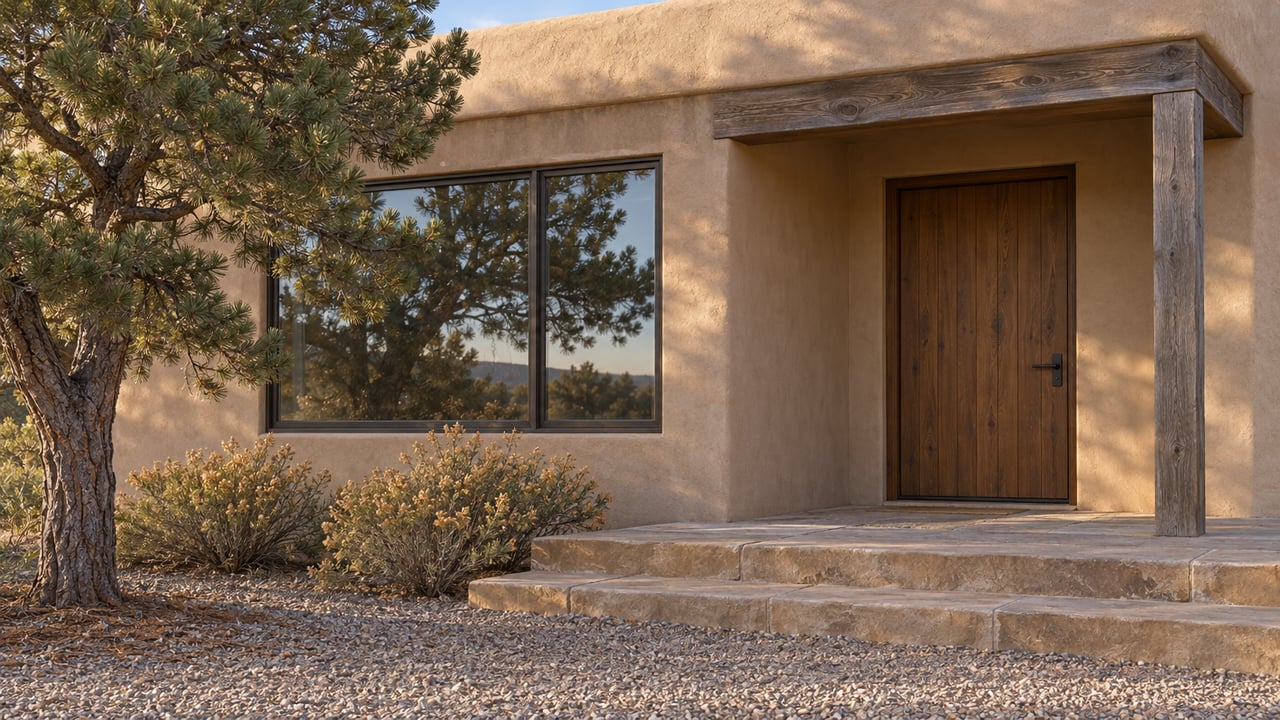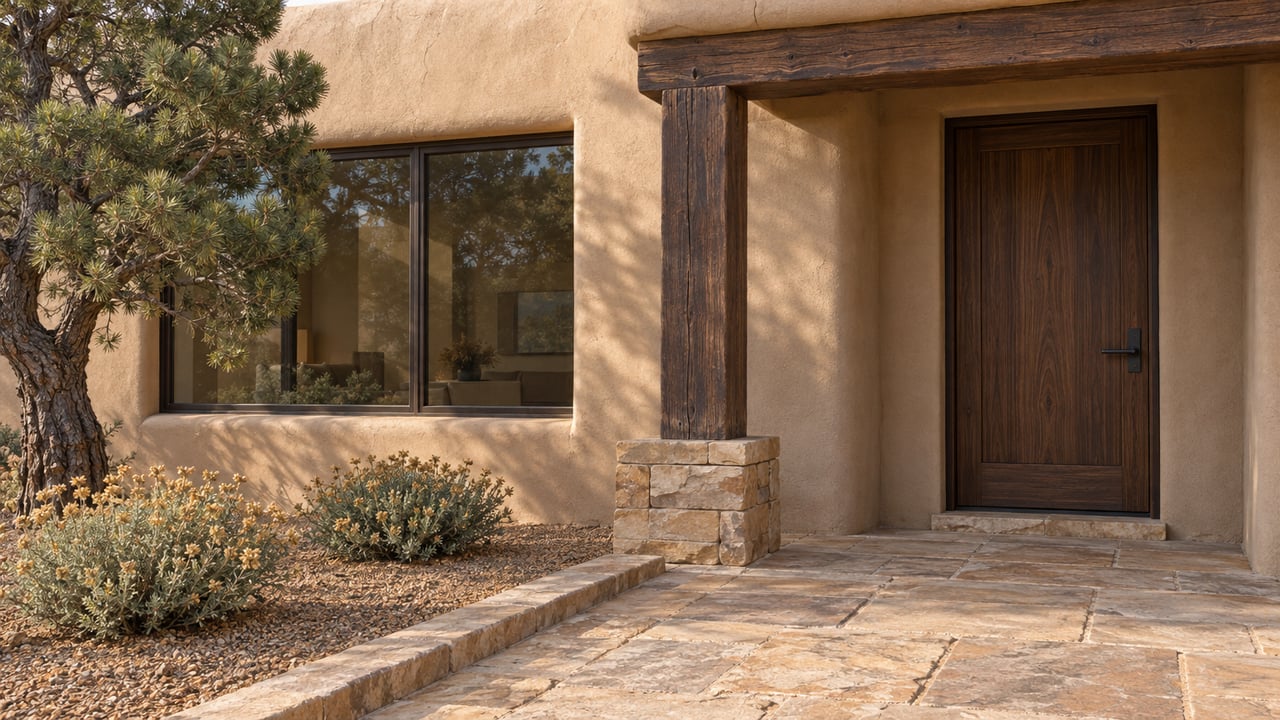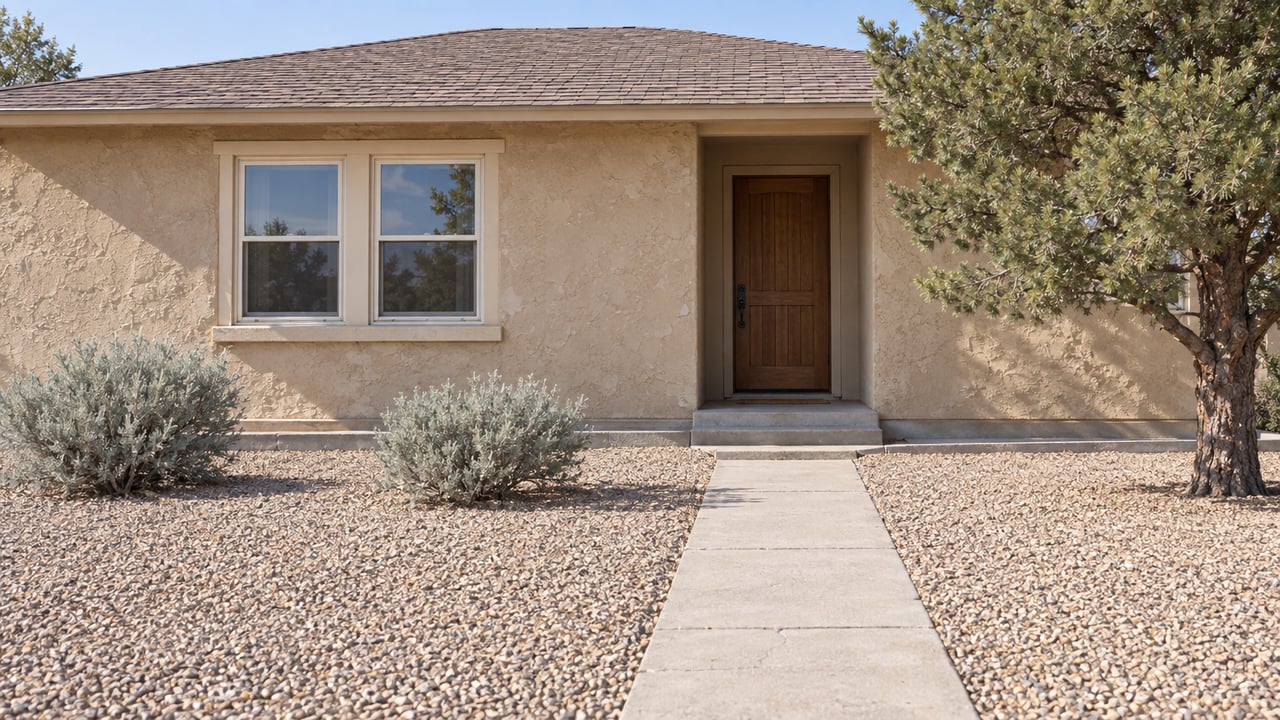
In April 1966, a family that had just moved to Los Alamos bought half of a duplex on 48th Street, in the section of town known today as the North Community. They'd been renting since arriving that February, because the previous owner of that house in Los Alamos wasn't a person. It was the federal government, which had owned homes there for more than twenty years.
That detail reads like a footnote until you're the one filling out a seller's disclosure this year on a Western Area ranch or a North Community duplex. Los Alamos was a government town before it was anything else, and the decades the Atomic Energy Commission spent building, holding, and eventually selling off its housing stock left a paper trail that surfaces at closing tables in 2026. Not because anyone is hiding something, but because that trail runs through a genuinely different set of documents than the one behind a house built last decade in Mirador or Quemazon.
What Actually Triggers the Extra Disclosure
Federal law requires sellers of any home built before 1978 to hand buyers the EPA's lead paint pamphlet, disclose any known lead paint hazards, and attach a signed Lead Warning Statement to the purchase contract. That rule applies everywhere in the country, but in most towns it only touches a scattered handful of listings. In Los Alamos it draws a much sharper line, because a large share of the housing in the Western Area, the North Community, and Bathtub Row went up between 1943 and the late 1950s, decades before that federal cutoff even existed.
New Mexico layers its own requirements on top. Nolo explains that under state real estate commission rules a broker has an independent duty to disclose material facts they know about a property, whether the seller mentions them or not. Before a buyer's offer can even be accepted, state law also requires an estimated tax levy to be provided.
None of that is unique to older neighborhoods. What is unique is how many boxes get checked automatically the moment a Los Alamos listing's construction date lands in the 1940s or 1950s, compared to a home built after 1978 a few streets away.
One 1946 Contract Built More of the Town Than You'd Expect
On July 29, 1946, the Army awarded a construction contract to the McKee Company to build homes on what had been open meadow and a wartime golf course. McKee's winning bid came in at $4,389,846 for 118 two-bedroom homes, 112 three-bedroom homes, and 58 three-bedroom duplexes, all built to a style that's since been nicknamed Cold War Moderne: concrete block and stucco walls, flat roofs, and an attached carport rather than a garage. That single contract created the Western Area, sometimes called New Mexico's first suburb.
A flat, built-up roof from that era ages differently than the pitched asphalt-shingle roofs common in most of the Southwest, and a concrete block wall system takes different repair techniques than wood frame construction. An inspector who's used to standard suburban stock can miss both, which is exactly why it's worth confirming your inspector has worked a Western Area or North Community property before, not just a Los Alamos listing in general.
Two Neighborhoods, Two Different First Documents
Barranca Mesa tells a different story from the same era. In 1958, a lottery awarded the first 68 residents privately held lots there, sold as raw land for buyers to build on themselves. That's a fundamentally different starting document than a Western Area or North Community title, where the first private owner didn't buy an empty lot. They bought an existing structure the government had built, owned, and rented out for years before Congress passed the 1962 law authorizing disposal of federally owned Los Alamos residential property, as the Library of Congress explains.
That distinction matters at the title company more than it matters on a walkthrough. If your home's chain of title runs back through one of those federal conveyances, it's worth asking your title company or real estate attorney whether any recorded covenant survives from that transfer. The Environmental Law Institute reports that the Department of Energy has historically attached remediation language to some of the land it released from federal ownership, promising to address contamination if it's ever found. Confirming whether that kind of covenant sits in your specific chain of title is a five-minute question for a title professional and a much bigger one to discover for the first time during underwriting.
The Fire That Put Two Build Eras on the Same Block
The Cerro Grande Fire in the summer of 2000 destroyed a number of the Western Area's perimeter homes. Larger houses went up in their place, built to current codes and current square footage expectations, sitting now next to homes that have stood since the McKee contract closed out in the late 1940s.
That means a single Western Area block can hold an 1,100-square-foot original alongside a 2,800-square-foot rebuild from the 2000s, which is exactly the kind of variation that trips up a straight per-square-foot comparison. If you're pricing a listing or evaluating an offer on this stretch of town, the year a specific house was built or rebuilt matters more than the neighborhood name on the listing sheet. Los Alamos County's own property search tool will show you a parcel's history if you want to confirm it yourself before you rely on anyone's verbal account.
The Rare Ones a Standard Inspection Checklist Doesn't Expect
Roughly 1,500 Lustron homes still exist nationwide, and five of them are in Los Alamos. These were factory-built steel houses from the years right after the war, assembled from porcelain-enameled steel panels with a steel roof that doubled as a radiant heating element. A smaller number of modest steel-frame houses under 900 square feet, sometimes called Denver Steel houses, also survive from the same period.
A standard home inspection checklist assumes wood framing or masonry. Enameled steel panels fail in their own way, typically at seams where chipped enamel lets rust take hold, and some lenders and insurers ask additional questions once they learn a property isn't conventional stick-built or masonry construction. If you own or are considering one of these five houses, raise that fact with your lender and insurer before you're deep into underwriting, not after an appraiser flags it.
A Few Questions Worth Asking Before You List or Offer
Does every older Los Alamos home need a lead paint disclosure? Any home built before 1978 does, regardless of which neighborhood it sits in. Your county assessor's records will show the construction year if you're not certain.
Is Barranca Mesa exempt from any of this because it started as private land? Not automatically. The 1958 lottery explains where the chain of title begins, but it doesn't tell you when a specific house was actually built. A home there constructed in the early 1960s, before some lots were built out, could still fall before the 1978 lead paint cutoff. Two separate questions apply to any older Los Alamos property: how old is the structure, and who sold it first. The first question decides your disclosure obligations. The second decides what a title search is likely to turn up.
Where do I check when my house was actually built or first sold? Los Alamos County's property and tax records are searchable directly, and the county clerk's office can walk you through requesting copies of recorded deeds if you want to trace the chain of title yourself.
If you're getting ready to sell a home that traces back to the McKee contract, one of the five remaining Lustron houses, or a rebuild that went up after the Cerro Grande Fire, the disclosure packet and the inspection conversation both look different than they would for a newer build across town. Jessica Hoffer can walk you through exactly what your specific property's history means for your listing, your disclosures, and the questions a buyer's inspector is likely to ask first.
This article is general information, not legal, tax or financial advice. Consult a qualified professional about your situation.