Looking for a home in Santa Fe and wondering what "Santa Fe style" really means? You are not alone. In this market, architecture is more than curb appeal. It shapes how a home lives, what kind of upkeep it needs, and even what rules may apply if you want to make changes. This guide will help you understand the main Santa Fe home styles, where you are most likely to find them, and what to keep in mind as you compare classic adobe homes with newer Santa Fe-inspired designs. Let’s dive in.
Why Santa Fe home styles matter
Santa Fe has one of the most distinct architectural identities in the country. That look comes from layers of Pueblo building traditions, Spanish colonial adobe construction, Territorial-era details, and later revival or contemporary interpretations.
It also comes from city policy, not just design taste. Santa Fe’s Historic Preservation Division oversees rules in five historic districts, and those districts cover about 12% of the city’s land area and apply to more than 6,500 structures. That helps explain why style, location, and renovation plans are closely connected here.
Another helpful point is that “Santa Fe style” is not just one thing. City code separates old Santa Fe style from recent Santa Fe style. Old Santa Fe style includes adobe-based architecture such as Pueblo, Pueblo-Spanish, and Territorial styles, while recent Santa Fe style builds on those forms with different materials and more decorative elements while still aiming to fit the local setting.
Classic adobe and Spanish-Pueblo
If you picture thick walls, earthy texture, quiet courtyards, and deep shade, you are likely thinking of classic adobe or Spanish-Pueblo architecture. This is the foundational housing language of Santa Fe.
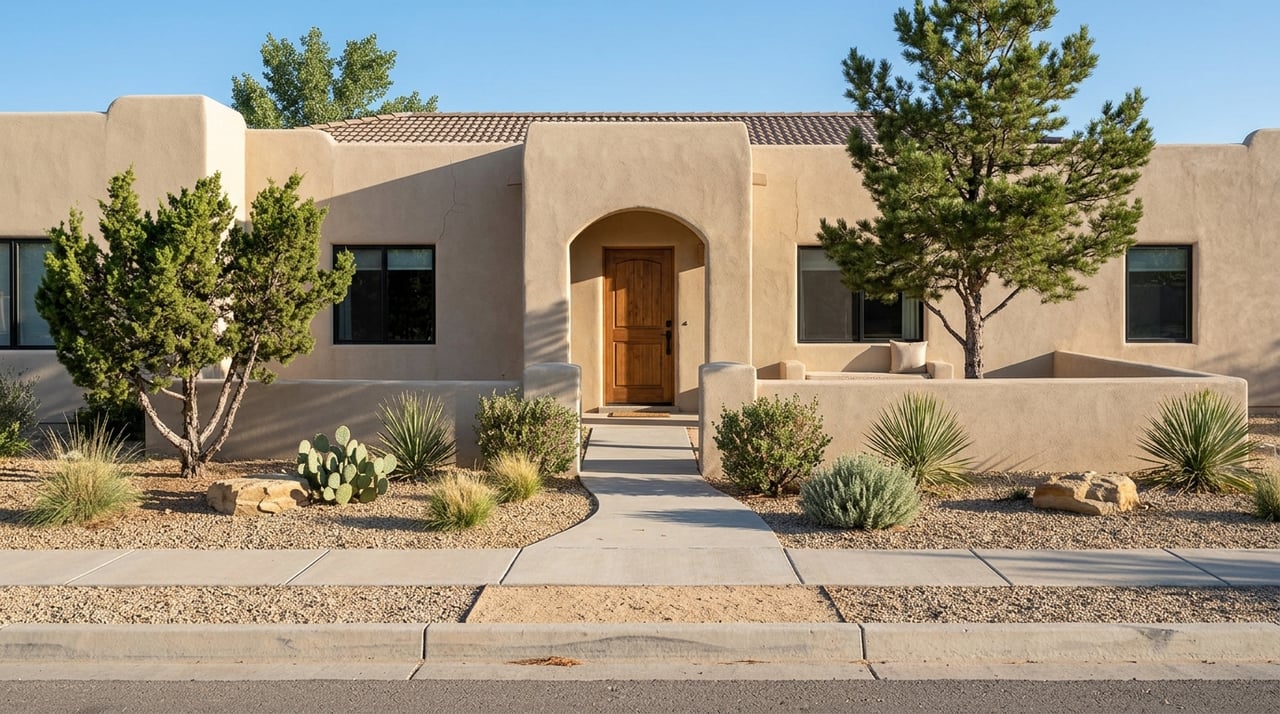
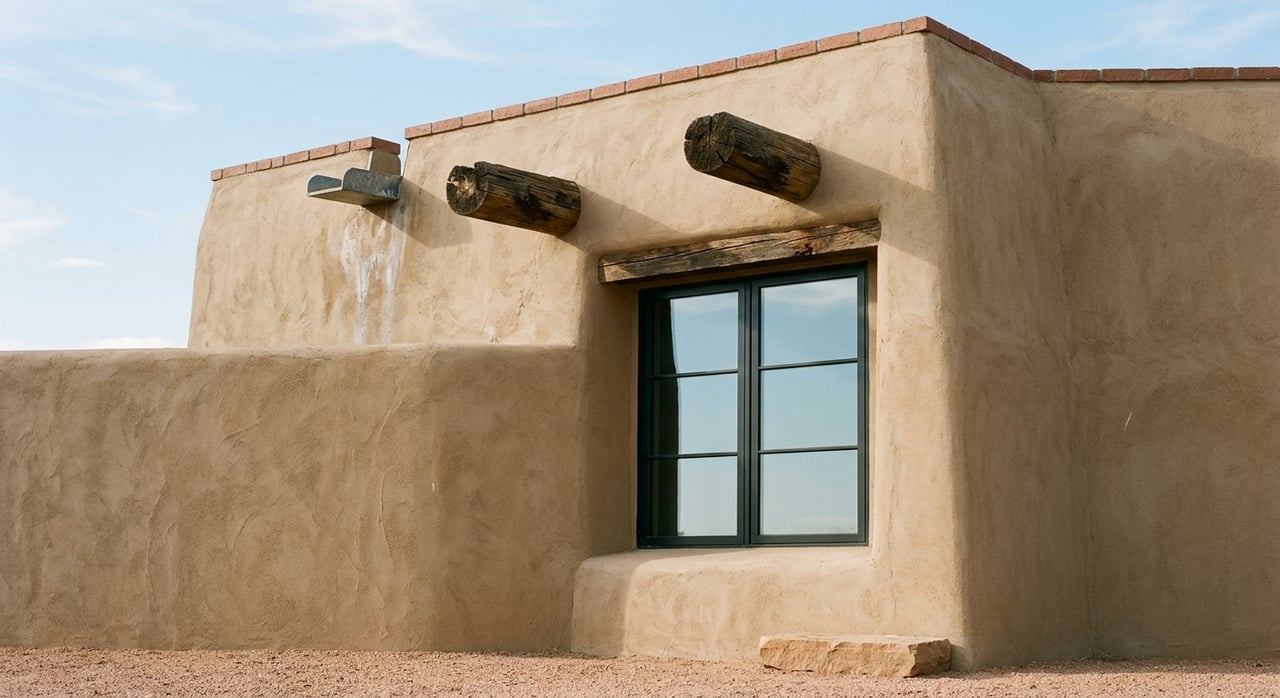
These homes are known for thick adobe or adobe-like walls, low or flat roofs, small openings, exposed wood beams, courtyards, and portal-style porches. The overall feeling is grounded and organic, with a strong indoor-outdoor connection that fits the high-desert climate and local building traditions.
For many buyers, this is the most authentic Santa Fe experience. These homes often feel deeply rooted in place rather than designed to follow a trend. If you want history, texture, and a home that feels truly tied to the region, this style often stands out first.
What to know about adobe upkeep
Adobe is beautiful, but it does require attention. Adobe bricks are sensitive to moisture and do not permanently harden the way fired brick does.
That matters in Santa Fe’s climate. NOAA normals for Santa Fe at 6,756 feet show 12.79 inches of annual precipitation and 20.2 inches of annual snowfall, with wetter conditions often concentrated in midsummer. In practical terms, roofs, parapets, plaster or stucco, flashing, and areas around roof penetrations deserve routine inspection, especially after snow and monsoon moisture.
The city’s preservation framework also reflects how important moisture control is. In historic districts, an actively leaking roof is treated as a life-safety emergency. If you are considering a classic adobe home, maintenance should be part of your buying conversation from day one.
Pueblo Revival and Santa Fe Style
Pueblo Revival is the style many people mean when they say they want a home that “feels like Santa Fe.” It became especially popular in the early 20th century and remains central to the city’s visual identity.
Common features include flat roofs, parapeted walls, rounded edges, stucco surfaces, projecting vigas, niches, and kiva fireplaces. It draws from Pueblo and Spanish-adobe traditions, but it is a revival style rather than the earliest original form.
This style tends to offer the Santa Fe look that many buyers recognize right away. It keeps the regional character front and center while often feeling a little more uniform or intentionally designed than older adobe compounds.
Why buyers love Pueblo Revival
Pueblo Revival often strikes a balance between character and familiarity. You still get the soft massing, warm palette, and iconic regional silhouette, but the homes may feel more approachable to buyers who want Santa Fe charm without needing the oldest possible property.
If your goal is a home with strong local identity, Pueblo Revival is often the style that checks that box most clearly. It is especially appealing if you want architecture that instantly reads as Santa Fe.
Territorial and Territorial Revival
Territorial style adds a different layer to Santa Fe’s housing story. It blends adobe massing with more formal details influenced by the Territorial period.
You may see flat-roof adobe construction paired with milled lumber, fired brick, pedimented lintels, brick copings, and square porch posts. Territorial Revival later echoed those forms with flat roofs and parapets, while also introducing dentilled brick copings, pedimented trim, evenly spaced windows, and a more symmetrical look.
Compared with Pueblo Revival, Territorial homes often feel crisper and more ordered. They still belong to Santa Fe’s regional vocabulary, but they bring in a little more formality and trim detail.
Who this style may suit
Territorial homes can be a great fit if you want Santa Fe character with a cleaner, more architectural appearance. Some buyers prefer that balance because it feels less sculptural than Pueblo Revival while still staying true to local history.
In practical terms, this style may appeal to you if you love adobe-inspired homes but want stronger lines, more symmetry, and more visible finish details around windows, doors, and porches.
Contemporary and recent Santa Fe style
Not every Santa Fe home is historic, and not every Santa Fe-inspired home tries to be a strict copy of the past. That is where contemporary homes and recent Santa Fe style come in.
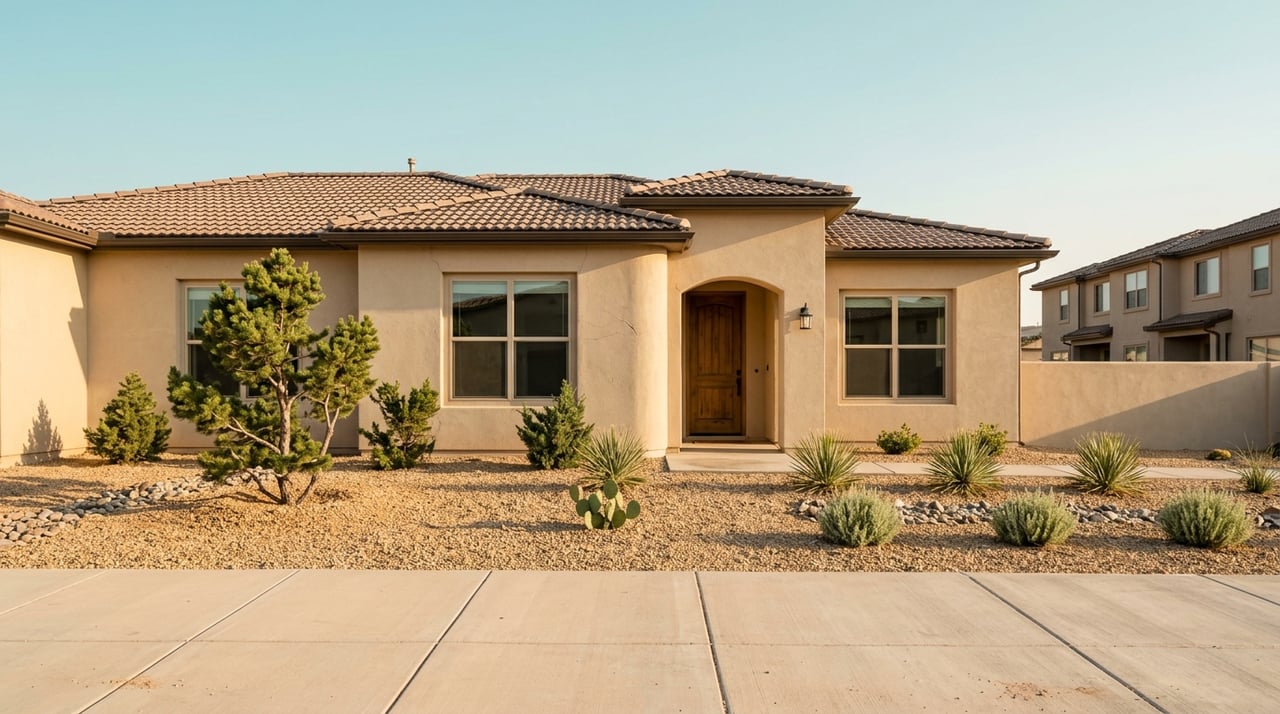
City code describes recent Santa Fe style as a development from old Santa Fe style that uses different materials and often additional decoration while maintaining harmony with historic buildings. In everyday terms, these homes often borrow the regional silhouette, palette, or massing while using newer construction methods and a more updated finish style.
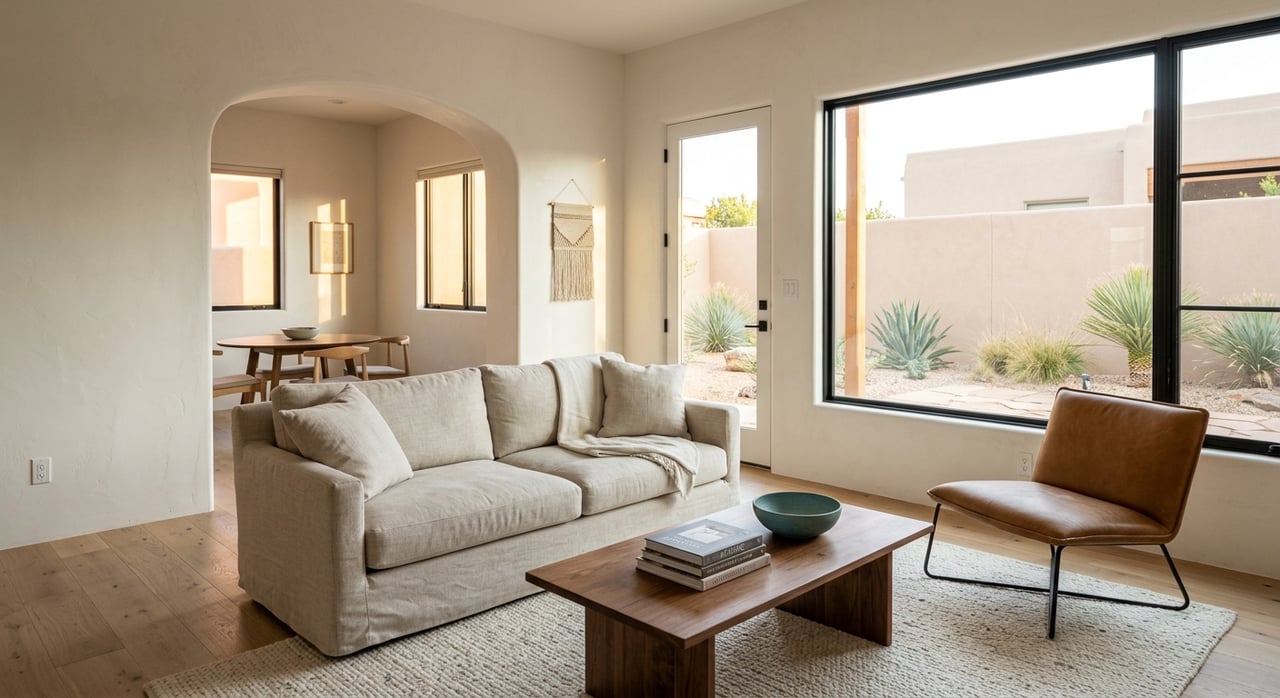
You might still see stucco exteriors, flat or low-profile rooflines, vigas, or earth-tone color schemes. But the overall look is often cleaner, less ornate, and more flexible than a deeply historic property.
Why contemporary homes attract buyers
For many buyers, newer Santa Fe-inspired homes offer a practical middle ground. You can still enjoy a regional look without taking on the same level of historic-specific maintenance or preservation restrictions that often come with older homes.
These properties may compete more on livability and efficiency than on historic provenance. If you love Santa Fe design but want a newer layout or fewer preservation-related considerations, this category is worth a close look.
Where you will see these styles
Architecture in Santa Fe is closely tied to location. If you know where to look, you can often narrow your search faster and focus on the style that best matches your goals.
Historic core homes
The strongest concentration of classic adobe and Pueblo Revival homes is in the historic core. The city describes the Downtown and Eastside district as the centerpiece and showcase of Santa Fe, and the Eastside includes some of the city’s oldest and most physically intact neighborhoods.
Old compounds are common there, and the street patterns point to very early development around the Plaza. Barrio de Analco is also notable as one of the oldest residential neighborhoods of European origin in the United States, with well-known examples of Spanish Pueblo architecture.
Older mixed-style areas
If you want older character but not only adobe-core architecture, Don Gaspar District in South Capitol is worth noting. The city describes it as a railroad-era area developed roughly between 1890 and 1930, with a mix of styles that includes bungalow forms and other eastern influences.
The Westside-Guadalupe and Agua Fria corridor tells a different story. Along Agua Fria Street, some houses predate 1900, and much of the growth occurred between 1920 and 1946. That makes the area useful for buyers interested in modest adobe residences, transitional forms, and homes that show layered change over time.
Areas with later layering
The Historic Review District helps show how Santa Fe’s architectural story continued into the 20th century. The city notes that much of this area was still undeveloped as late as the 1950s, which helps explain why older Santa Fe forms, mid-century revival work, and later development can appear near one another.
Outside the most tightly regulated historic districts, you are more likely to encounter newer infill homes and more contemporary Santa Fe-inspired construction. That broader part of the city gives buyers more chances to find updated versions of the local style.
Renovation rules to know
If you fall in love with a home in one of Santa Fe’s five historic districts, style is only part of the picture. The city requires property owners in those districts to apply for modifications.
Some general maintenance and minor alterations may be approved by staff. Other work may require review by the Historic Design Review Board. That means a home’s location can affect how simple or complex future exterior changes may be.
This does not have to be a dealbreaker. It just means you should go in with clear expectations. If you are considering a historic property, it helps to understand both the home itself and the review process that may come with it.
How to choose the right style
The right Santa Fe home style depends on what matters most to you. A beautiful match is not just about appearance. It is also about maintenance, flexibility, and how you want the home to feel day to day.
Here are a few simple ways to think about it:
- Choose classic adobe or Spanish-Pueblo if you want the deepest sense of history, texture, and local character.
- Choose Pueblo Revival if you want the iconic Santa Fe look that many buyers picture first.
- Choose Territorial or Territorial Revival if you want regional character with more symmetry and formal detailing.
- Choose contemporary or recent Santa Fe style if you want Santa Fe-inspired design with newer materials and a more updated feel.
A smart home search in Santa Fe often starts with style, then moves quickly into location, maintenance expectations, and any historic-district review requirements. When those pieces line up, it becomes much easier to find a home that fits both your taste and your lifestyle.
Whether you are relocating, looking for a second home, or searching for a property that captures a true Northern New Mexico feel, having a guide who can help you read the differences between home styles can make your search much clearer. If you are exploring Santa Fe homes and want local, concierge-style support, connect with Jessica Hoffer for thoughtful guidance tailored to your goals.
FAQs
What is the difference between old Santa Fe style and recent Santa Fe style in Santa Fe?
- Old Santa Fe style refers to adobe-based architecture such as Pueblo, Pueblo-Spanish, and Territorial styles, while recent Santa Fe style is a later interpretation that uses different materials and more decoration while staying visually compatible with historic surroundings.
What defines a classic adobe home in Santa Fe?
- A classic adobe home in Santa Fe typically features thick adobe or adobe-like walls, low or flat roofs, smaller openings, exposed wood beams, courtyards, and portal-style porches.
What makes Pueblo Revival homes popular in Santa Fe?
- Pueblo Revival homes are popular because they reflect the look many buyers associate most strongly with Santa Fe, including flat roofs, parapets, rounded forms, stucco surfaces, vigas, and other regional details.
What should buyers know about maintaining adobe homes in Santa Fe?
- Buyers should know that adobe is moisture-sensitive, so roof drainage, parapets, plaster or stucco, flashing, and signs of water intrusion deserve close attention, especially after snow or midsummer moisture.
Where are historic home styles most common in Santa Fe?
- Historic adobe and Pueblo Revival homes are most concentrated in the Downtown and Eastside district and other older areas such as Barrio de Analco, while mixed historic and transitional styles also appear in places like Don Gaspar and the Agua Fria corridor.
Do historic districts affect home renovations in Santa Fe?
- Yes, homes in Santa Fe’s five historic districts may require city approval for exterior modifications, with some work handled administratively and other changes requiring board review.